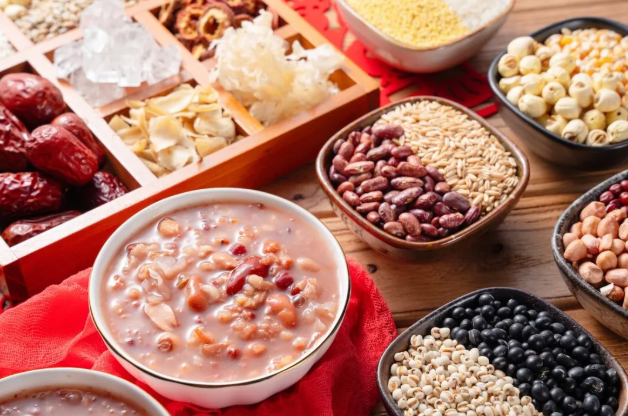
As the seasons change and the Laba Festival approaches, red beans, green beans, and red dates tumble in waves of rice in clay pots on old stoves. A bowl of Laba porridge, a tradition spanning thousands of years, warms the winter and connects Chinese people with their cherished reunions. Laba porridge ingredients vary, with each family having its own preferences, but most commonly include grains, beans, and dried nuts. In recent years, imported miscellaneous grains and beans have further enriched our tables. Below, we outline the key considerations for importing grain.
The General Administration of Customs of China (GACC) has published a list of permitted grain types and their approved countries or regions of origin. You may consult the Catalogue of Permitted Types of Imported Grain (Including Seed and Tuber Grains, Oilseeds) and Plant-Based Feed, and Their Exporting Countries or Regions on the website of the GACC Animal and Plant Quarantine Department.
The GACC implements a registration system for overseas production, processing, and storage enterprises (collectively referred to as overseas production and processing enterprises) involved in grain imports. These enterprises shall comply with the laws, regulations, and standards of their exporting country or region, as well as meet China's relevant legal, regulatory, and mandatory standard requirements. According to the GACC Announcement on Management Requirements for Declaration of Imported Agricultural Products by Overseas Enterprises, starting from December 15, 2025, when importing products listed in the Catalogue of Imported Agricultural Products Requiring Official Recommendation for Registration, the registration number in China of the overseas production enterprise (Code 302) must be accurately entered under the "Product Qualification" section of the customs declaration form.
In accordance with the Measures for the Supervision and Administration of the Inspection and Quarantine of Imported and Exported Grain, the importer shall, prior to signing a trade contract, apply for quarantine approval pursuant to regulations such as the Measures for the Administration of Quarantine Approval of Imported Animals and Plants, obtain the Import Animal and Plant Quarantine Permit of the People's Republic of China, and incorporate into the trade contract all relevant requirements, including national grain quality and safety standards, plant quarantine stipulations, and those specified in the Quarantine Permit.
Where the Chinese government has established relevant requirements through bilateral agreements, protocols, memoranda, or other arrangements with the government of the exporting country or region, the additional declarations on the Plant Quarantine Certificate must comply with the relevant plant quarantine requirement announcements.
Importers of genetically modified products shall hold a valid Biosafety Certificate for Agricultural Genetically Modified Organisms issued by the Ministry of Agriculture and Rural Affairs. During customs declaration, select "16-Genetically Modified Product" under "Goods Attribute", add "330-Biosafety Certificate for Agricultural Genetically Modified Organisms" under "Product Qualification", and accurately enter the complete certificate number.
Grain is fundamental to people's livelihood. Importers must earnestly fulfill their primary corporate responsibility by thoroughly understanding all applicable import and declaration requirements before hand, and making lawful and truthful declarations to Customs. Let us work together to safeguard grain security and uphold national security.
Customs enforces stringent regulations on the declaration, inspection, storage, and transportation of dangerous goods throughout the import and export process. However, these same goods are also pervasive in our daily lives, with "danger" often lurking within the most commonplace items. Understanding their properties and applying essential safety knowledge are therefore crucial for risk prevention.
The term “dangerous goods” broadly refers to two categories: hazardous chemicals and dangerous cargo.
Hazardous chemicals are defined as chemicals, particularly highly toxicones, which possess toxic, corrosive, explosive, flammable, or combustion-supporting properties, posing hazards to human health, facilities, and the environment. Dangerous cargo comprises substances and articles exhibiting hazardous characteristics, including explosiveness, flammability, toxicity, infectivity, corrosiveness, and radioactivity. These items, if not properly handled during transportation, storage, production, use, or disposal, are capable of causing casualties, property damage, or environmental pollution, thus necessitating special protective measures.
In daily life, dangerous goods are ubiquitous, from fireworks and firecrackers, gasoline, and liquefied petroleum gas to pesticides. A single moment of negligence can lead to catastrophic consequences. Nevertheless, it's important to recognize that these goods serve indispensable functions in modern production and daily life. Therefore, it is imperative to strictly adhere to all safety precautions when handling or using them in order to mitigate risks.
(1) Fireworks and Firecrackers
China has a tradition of using fireworks and firecrackers during festivals and celebrations. When igniting them, ensure you are a safe distance from flammable materials, choose an open and safe location, and always follow the manufacturer’s instructions carefully. Children must only handle firecrackers under direct adult supervision. For storage, keep them away from all ignition sources (open flames, electrical sparks) and store them separately from other flammable or explosive materials. In case of any injury, seek immediate medical attention.
(2) Refined Petroleum Products
Common refined petroleum products in daily life include gasoline, diesel, kerosene, and fuel oil. These products are highly flammable. They must be stored in a cool, well-ventilated area away from any open flame or heat source. Appropriate fire-fighting equipment should be readily available in the storage area.
(3) Liquefied Petroleum Gas
Liquefied petroleum gas is a flammable gas. In daily life, it is commonly stored in pressurized cylinders. The cylinder itself contains no oxygen and maintains internal pressure far exceeding the external environment. Therefore, if flames are only present at the cylinder mouth, the cylinder usually will not explode. However, if a leak has occurred over time, allowing a large amount of combustible gas to accumulate in a confined space, the mixture can become highly explosive upon contact with an open flame or static electricity.
When an initial fire occurs in a liquefied gas cylinder due to rupture or detachment of the hose, remain calm. A wet towel can be used to smother the ignition point. Once the flame is out, turn off the valve. Do not lay the burning liquefied gas cylinder on the ground. If the cylinder is lying horizontally, gas will flow out through the mouth and expand rapidly. The combination of this expanding gas and the high temperature from combustion may lead to an explosion and cause injuries.
(4) Lithium Batteries
Lithium batteries are widely used in equipment such as mobile phones, tablets, power banks, digital cameras, electric toys, electric bicycles, and electric vehicles, making them ubiquitous in daily life. However, improper use, such as overcharging, short-circuiting, or contact with open flames, may cause fire or even explosion, resulting in casualties and property losses. Lithium batteries should be used in a relatively moderate environment, with an operating temperature typically ranging from 0°C to 60°C. Prolonged or overnight charging should be strictly avoided. When charging, always use original or major brand chargers, which are designed with protection circuits that stop charging upon detecting a full battery, thereby effectively preventing overcharging.
(5) Hydrogen Peroxide
Hydrogen peroxide is commonly used in daily life for cleaning wounds, ulcers, burns, etc., and many households store it for emergencies. Because it is a strong oxidizer and corrosive agent, it should not be used on metal surfaces and should be kept separate from alkaline and oxidizing substances. Important usage notes include: For external use only. Do not ingest. Wear protective gloves when handling (gloves may be omitted for highly diluted solutions). In addition to causing irritation and burns to skin, eyes, and mucous membranes, hydrogen peroxide is also flammable. The oxygen produced during decomposition can strongly support combustion, and contact with flammable materials or organic substances may lead to explosions.
Certain locations, such as school chemistry laboratories, may house highly toxic reagents including yellow phosphorus, potassium cyanide, sodium cyanide, and arsenic trioxide. Other common sites include gas stations, liquefied petroleum gas retail points, hospitals, and chemical plants, where you might encounter dangerous goods like refined petroleum products, liquefied gases, radioactive materials, and industrial or medical chemicals. In all such locations, strict adherence to site-specific safety rules and regulations is essential to prevent accidents.
Disclaimer:The above content is translated from Chinese version of Tianjin Customs 12360 Hotline. The Tianjin Customs 12360 Hotline version shall prevail.