Representatives from the Chinese and Bulgarian auto industries recently gathered in Sofia, the Bulgarian capital, for a business matchmaking events focused on supply chain collaboration, technological innovation, and market expansion. There was a broad consensus that the growing complementarity between the two nations in engineering capability, industrial ecosystems, and technological depth is creating significant opportunities to forge a new partnership aimed at the European market.
Figures show that over the past decade, automotive manufacturing has become Bulgaria's fastest-growing sector. From a virtual standing start, it now accounts for 10 percent to 11 percent of the national GDP. The industry has undergone a dramatic transformation: the number of firms has surged from around 30 in 2012 to over 380 today, while employment has skyrocketed from under 9,000 to more than 85,000. Meanwhile, R&D centers have proliferated from a single site to 38. The supply chain, once limited to tier 1 and tier 2 suppliers, has evolved to support full vehicle assembly, marking the maturation of a sophisticated industrial ecosystem.
The industrial scale-up has been matched by the rise of engineering and R&D prowess as Bulgaria’s core competitive advantage. Tsvetan Simeonov, the president of Bulgarian Chamber of Commerce and Industry, highlighted that a number of global players have already established R&D bases in Bulgaria, further cementing the country’s stronghold in software and electronics.
This strength is what positions Bulgaria as an increasingly vital gateway for Chinese automotive investment in Europe. A prime example of such bilateral industrial synergy is the partnership between Bulgarian Automotive Industry (BAI) and Great Wall Motor (GWM). Andon Dimitrov, a BAI representative, explained that GWM first entered the Bulgarian market in 2011. The factory, jointly launched in Bahovitsa village by the two partners in 2012, made history as the first facility within the EU to mass-produce Chinese-branded vehicles. With the capability to assemble seven different models simultaneously and an annual capacity of 50,000 units, the plant is now slated for a comprehensive upgrade with the aim of restarting production in partnership with GWM by mid-2026, focusing on new models equipped with autonomous driving functions.
Beyond such established players, new ventures are also emerging and scaling rapidly. A prime example is the CMC company. Established in 2021 under the Eurohold Group, CMC has rapidly expanded its footprint across Bulgaria and neighboring countries. This growth has been fueled by its partnership with Dongfeng Motor, which, as company representative Nikolova stated, has given CMC access to a portfolio of 26 models spanning fuel, hybrid, and electric power trains to effectively meeting fast-changing local demand.
Bulgaria’s growing industrial capabilities are mirrored by the overarching strength of China’s automotive sector. In 2024, both production and sales of automobiles in China exceeded 31 million units, cementing its position as the world’s largest market for the 16th consecutive year. The surge in new‑energy vehicles is particularly striking: annual sales have soared from fewer than 1.4 million in 2020 to over 12.8 million, now accounting for more than 40 percent of the market. As Ambassador of China in Bulgaria H.E. Dai Qingli highlighted, the industry in China is undergoing a fundamental shift - evolving from traditional transportation into integrated smart devices on wheels, mobile energy-storage hubs, and personalized digital living spaces that incorporate new energy, AI, and big-data technologies. This evolution, she stated, is creating unprecedented opportunities and a broader horizon for deepening Sino‑Bulgarian cooperation in the automotive sphere.
According to Liu Wenji, Vice President of the China Automobile Dealers Association, Sino-Bulgarian cooperation is built on a solid market-driven foundation. She points to the global recognition of Chinese innovations - in smart cockpits, autonomous driving, and high-performance batteries - a fact underscored by the adoption of these key technologies by several European automakers in their latest models. This export momentum is underpinned by China’s deep technological reserves in new energy and intelligent driving, which are highly complementary to Bulgaria’s own strengths, namely manufacturing automotive components, providing access to the European market, and fostering technical innovation. Furthermore, this synergy presents concrete opportunities for the two sides to collaborate in three key areas: fostering a regionally integrated industrial ecosystem, jointly developing markets across Central and Eastern Europe as well as Eurasia, and promoting the harmonization of standards for vehicle testing, certification, and after-sales service.
This deepening industrial collaboration is also gaining strong government support. Deputy Minister of Economy and Industry, Doncho Barbalov, pointed out that Bulgaria’s auto parts sector already boasts over 350 companies and 72,000 workers supplying the European automotive industry. He argued that the country should not only maintain this strength but also “be more ambitious and consider assembling vehicles domestically”. These steps, he added, are supported by a positive macroeconomic climate: an economic growth rate of 3.2 percent, membership in the Schengen Area (the border-free zone of European countries that are party to the Schengen Agreement), and its scheduled entry into the Eurozone in 2026. These developments will further improve the business environment and deepen the country’s integration with the broader European market. Consequently, he stated that Bulgaria will place greater emphasis on attracting high-value-added and capital-intensive investments.
Looking ahead, as the complementarity between China and Bulgaria in technology, manufacturing, and markets becomes increasingly evident, their automotive industries are well-positioned to achieve more substantive outcomes. This progress will unfold against the backdrop of Europe's green transition and a reshaping global industrial landscape. Such cooperation is expected to set a new benchmark for industrial collaboration in Central and Eastern Europe and beyond.
Disclaimer:The above content is translated from Chinese version of Economic Daily. The Economic Daily version shall prevail.
Related News

Ningbo Positions Itself as Prime Gateway for Central and Eastern European Agri-Products Entering China
2025-11-21
A Joint Declaration on cooperation was recently inked between the China-CEEC Customs Information Center and the Association for the Promotion of Agricultural Cooperation between China and the Central and Eastern European Countries (APACCCEEC), to bolster collaborative efforts in facilitating the import of distinctive and high-quality agricultural and food products from Central and Eastern European countries (CEECs).
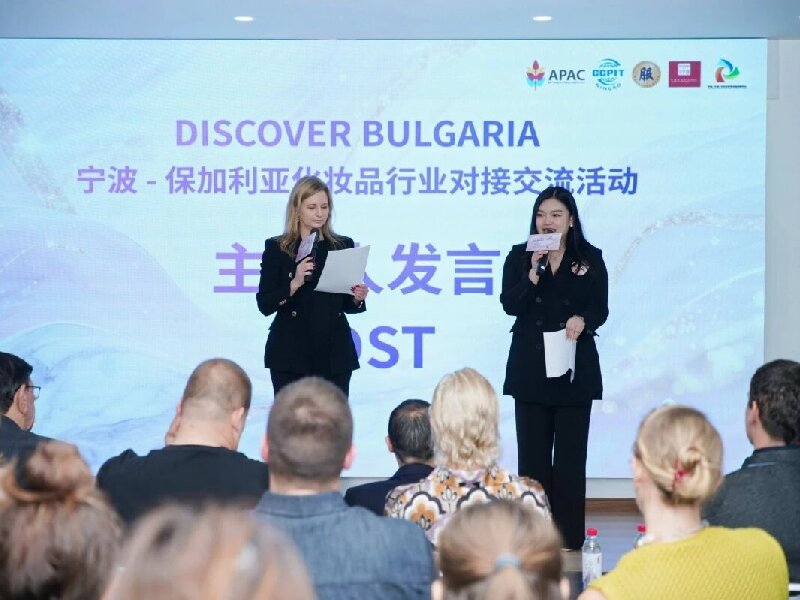
Bulgarian Roses Make a Scent-sation in Ningbo as Businesses Jet In for Collaboration
2025-11-13
On November 8, Bulgarian business representative Mihaela Aprilova jetted into Ningbo for the“Discover Bulgaria Ningbo - Bulgaria Cosmetics Industry Matchmaking and Exchange"
.jpg)
Ningbo's Trade with CEECs Tops 45 Billion Yuan in First Three Quarters
2025-10-27
According to Ningbo Customs, in the first three quarters of this year, Ningbo's bilateral trade with CEECs reached 45.45 billion yuan, a 7% year-on-year increase, outpacing the city's overall trade growth by 3.3 percentage points.
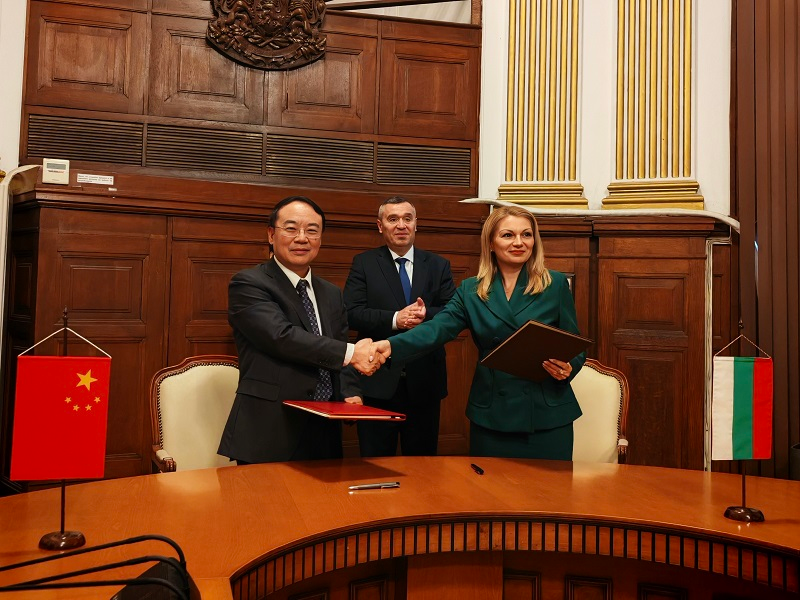
Deputy Commissioner of the General Administration of Customs of China Wu Haiping in Talks with Swiss, Bulgarian Authorities
2025-10-22
From October 13 to 18, Wu Haiping, Deputy Commissioner of the General Administration of Customs of China, led a delegation on an official visit to Switzerland and Bulgaria, engaging with counterpart authorities and relevant international organizations.
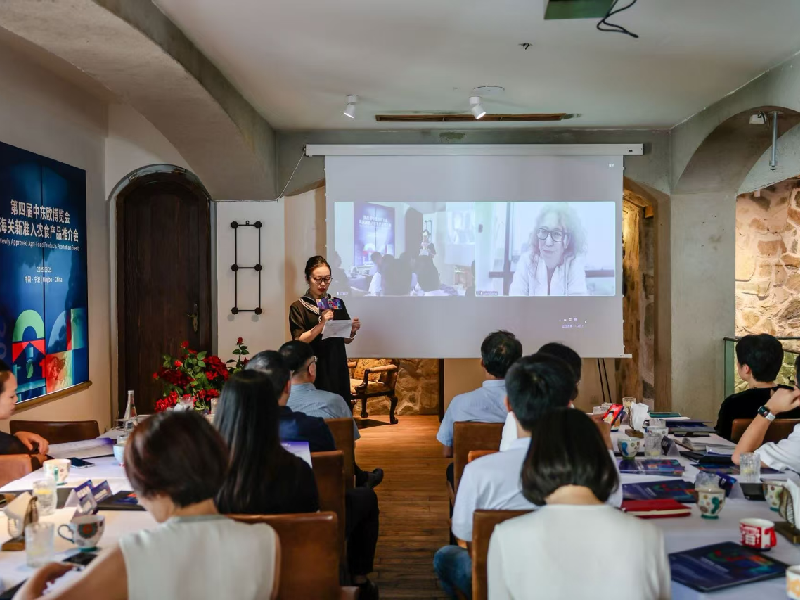
Quality Agri-Foods from Central and Eastern European Countries (CEECs) Gain Easier Access to China, Following the Fourth China-CEEC Expo Promotion Event for Newly-admitted Agri-Foods
2025-09-28
On September 25, the Promotion Event for Newly Admitted Agri-Food Products of the Fourth China-CEEC Expo was successfully held at the China-CEEC Commodities Exchange and Experience Center.
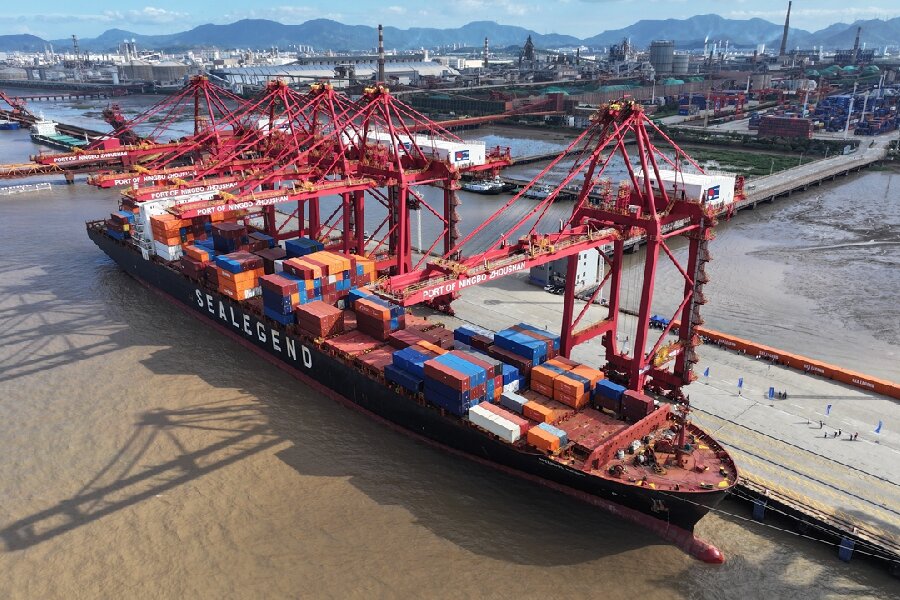
From Zhejiang to UK, world’s first China-Europe shipping route via Arctic Ocean officially launched
2025-09-23
The container ship Istanbul Bridge completed loading its final container at Berth 7 of the Beiyi Container Terminal in Ningbo-Zhoushan Port, East China's Zhejiang Province, on Monday
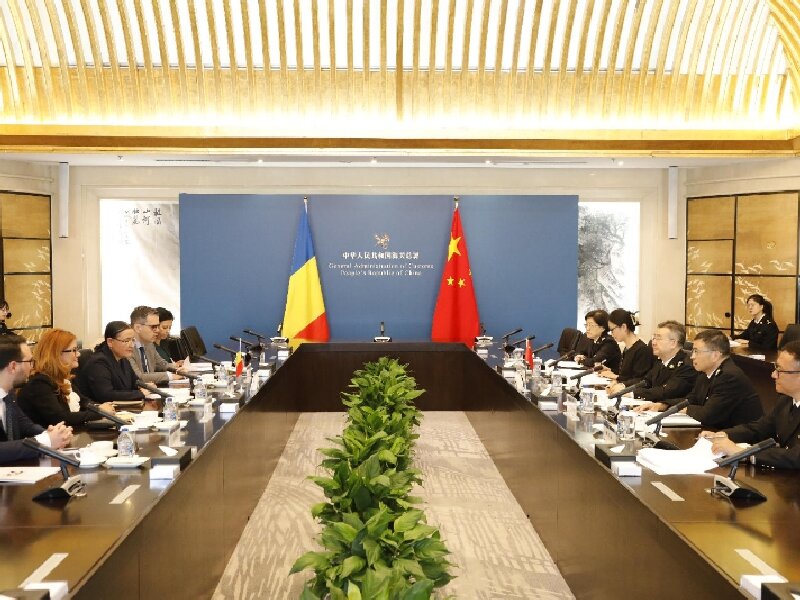
Zhang Baofeng, the CPC Committee Member &Director General of General Office of the General Administration of Customs of China, Meets with Violeta Musat, the Romanian Secretary of State with the Ministry of Agriculture and Rural Development
2025-09-22
The two sides exchanged views on deepening cooperation in customs inspection and quarantine, animal disease prevention and control, and promoting the healthy development of bilateral trade in agricultural and food products.
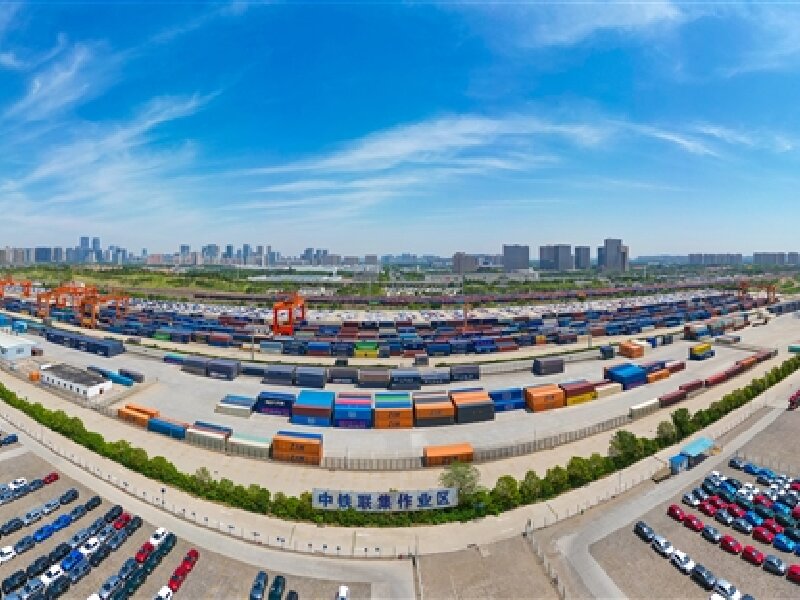
China-Europe Railway Express Paves "Fast Track" for Economic and Trade Exchanges
2025-09-18
As a crucial gateway for China-Europe freight trains to and from Europe, Poland occupies a key position in the Eurasian logistics network.
Hot News