This guideline is based on data collection and for reference only (updated on 24 February 2026). The latest information is subject to the official release of the relevant department.
1. Entry Qualifications and Document Preparation
1.1 Visa Requirements and Visa-Free Policies
China implements various visa-free policies for citizens of different countries.
1.1.1 Visa-free Access for Different Countries
1.1.1.1 Mutual Visa Exemption
According to the Agreements on Mutual Visa Exemption Between the People’s Republic of China and Foreign Countries, foreign citizens who meet the conditions can stay for no more than 30 days at a time and no more than 90 days in total within 180 days. Up to now, China has signed visa-free agreements with many countries. For the specific list of countries and details of the agreements, please refer to the information published on the official website of the Ministry of Foreign Affairs of China.
↓
1.1.1.2 Unilateral Visa Exemption
The unilateral visa exemption policy applies to holders of ordinary passports from 50 countries. Including France, Germany, Italy, the Netherlands, Spain, Switzerland, Ireland, Hungary, Austria, Belgium, Luxembourg, Poland, Slovenia, Portugal, Greece, Cyprus, Slovakia, Norway, Finland, Denmark, Iceland, Andorra, Monaco, Liechtenstein, Bulgaria, Romania, Croatia, Montenegro, North Macedonia, Malta, Ireland Shania, Latvia, Russia, Sweden, Britain, Canada, Australia, New Zealand, Brunei, South Korea, Japan, Saudi Arabia, Oman, Kuwait, Bahrain, Brazil, Argentina, Chile, Peru, Uruguay. Persons from the above-mentioned countries holding ordinary passports can entry China visa-free for business, tourism, visiting relatives and friends, exchange visits, and transit for no more than 30 days. The stay period is calculated from 0:00 on the day following entry.
↓
| List of Countries Covered by Unilateral Visa Exemption Policies |
1.1.2 Regional Visa-Free Entry
In addition to the national visa-free policy, China has also established regional visa-free entry policies to provide more convenient entry arrangements for specific regions:
↓
1.3 Visa-Free Transit Policies
China also implements 24 hours and 240 hours visa-free transit policies: The 24 hours visa-free transit policy applies to people from all countries. Those who stay in China for no more than 24 hours and will not leave the restricted areas of ports can be exempted from obtaining a visa. The 240 hours visa-free transit is applicable to people from 55 countries including the United States, Russia, the United Kingdom, and Norway. With their valid international travel documents and onward tickets with confirmed seats and departure dates, who need to transit through China to third countries or regions, may enter visa-free through any of the designated ports, and stay in the permitted areas for no more than 10 days.
↓
1.4 Visa Processing
Notice on applying for a Visa to the People's Republic of China
↓
| Notice on applying for a Visa to the People's Republic of China |
1.5 Required Documents
No matter which entry method you choose, you need to prepare the following basic documents:
2. Customs declaration and inspection procedures
2.1 Regulations on quarantine inspection
Persons entrying or exiting the country shall undergo quarantine inspection in accordance with the law and may enter or exit the country only after obtaining permission from the customs.
The items of personnel enjoying diplomatic, consular privileges and immunities and other related treatments, as well as those of institutions and personnel enjoying such treatments, shall be subject to quarantine inspection in accordance with the law when entrying or exiting the country, provided that it does not affect their legal enjoyment of privileges and immunities.
For entry and exit travelers, Customs may require them to truthfully declare their health conditions and related information, conduct temperature checks and medical examinations, and, if necessary, review their travel documents. For specific details, please refer to the "Frontier Health and Quarantine Law of the People's Republic of China".
↓
| Frontier Health and Quarantine Law of the People’s Republic of China |
2.2 Declaration Requirements
According to the "Measures of the Customs of the People's Republic of China for Supervision over Inbound and Outbound Luggage and Articles", when entrying or exiting the country, personnel carrying luggage and articles shall truthfully declare to the Customs. Entrying personnel must make a written declaration to the Customs under any of the following circumstances:
1. Carrying prohibited items into the country;
2. Carrying restricted items into the country in excess of the limit or quantity requirements or requiring the submission of license documents and other supporting materials;
3. Carrying animals, plants, animal and plant products and other quarantine items;
4. Carrying items related to public health security, such as blood and other human tissues, pathogenic microorganisms, and biological products;
5. Carrying items contaminated by quarantinable infectious diseases or posing a risk of spreading such diseases;
6. Carrying more than the prescribed amount of currency in cash;
7. Carrying items that exceed the prescribed tax-exempt amount or the limit requirements;
8. Carrying goods, samples or advertising materials;
9. Where luggage and articles are transported in by separate mode of transportation;
10. Carrying other luggage items that are required by law to be declared in writing.
There are similar declaration requirements for exiting personnel, especially when carrying prohibited or restricted outbound items, goods, samples, advertisements, blood and other human tissues, pathogenic microorganisms, biological products and other items related to public health security, items contaminated by quarantinable infectious diseases or at risk of spreading quarantinable infectious diseases, as well as cash in excess of the prescribed amount.
↓
2.3 Red and Green Channel System
China's Customs implements the "red and green Channel" declaration model:
It should be noted that even if the green channel is chosen, the Customs still has the right to conduct inspections as needed.
↓
2.4 Declaration Method
Entry and exit personnel can provide paper declaration or electronic declaration to the customs.
↓
2.5 Customs Inspection Processing
The Customs shall conduct inspections on inbound and outbound luggage and articles in accordance with the law. The time and place of the inspection shall be determined by the Customs based on the actual situation. During inspection:
↓
2.6 Quarantine Requirements
The Chinese Customs implements a strict quarantine system for inbound and outbound items. Items listed in the "Catalogue of Prohibited Animals, Plants and Their Products and Other Quarantine Items from Being Carried or Mailed into the Country" are not allowed to be brought into the country. All other animals, plants and their products and other quarantine items need to be declared and subject to quarantine. And personal items need to meet the reasonable requirements for personal use.
↓
3. Taxable items and tax exemption amounts
3.1 Tax Exemption Policy
According to the "Measures for the Supervision of Inbound and Outbound Luggage and Articles of the People's Republic of China", inbound and outbound luggage and articles should meet the requirements for reasonable personal use. If the quantity exceeds the reasonable self-use limit, Customs formalities shall be handled as goods. The tax exemption quota for inbound items has been adjusted to be formulated by The State Council. The "Measures" have deleted some relevant provisions on tax exemption quotas in regulations and added guiding provisions for the collection of taxes on inbound items.
At present, China offers a certain amount of tax exemption for personal items carried by inbound passengers. The specific tax exemption amount will be adjusted according to national policies. It is recommended to check the latest announcements of the Chinese Customs before traveling. It should be noted that the tax exemption quota does not apply to prohibited or restricted items entrying the country, nor does it apply to items exceeding a reasonable personal use quantity. The "List of Tax Exemption Limits for Inbound Luggage and Articles" can be found in the "Measures for the Collection of Tariffs, Value-Added Taxes and Consumption Taxes on Inbound Articles".
↓
3.2 Tax Payment
For items that exceed the tax exemption limit or fall within the scope of taxation, the corresponding taxes shall be paid in accordance with the "Tariff Law of the People's Republic of China", the "Measures for the Collection of Tariffs, Value-Added Taxes and Consumption Taxes on Inbound Items", and other relevant laws and administrative regulations. The Customs levies taxes on the luggage and articles permitted to entry the country. The "Comprehensive Tax Rate Table for Tariffs, Value-Added Tax and Consumption Tax on Inbound Items" can be found in the "Measures for the Collection of Tariffs, Value-Added Tax and Consumption Tax on Inbound Items".
If taxes need to be paid, the Customs will issue a tax payment certificate. Entrying and exiting personnel should complete the payment within the prescribed time. Taxes can be paid in cash, by bank card or through electronic payment, etc.
↓
3.3 Separate Transport Luggage
Passengers entrying and exiting the country may transport their luggage and belongings in or out by separate ways. When entrying personnel bring in luggage and articles by separate transportation, they shall declare to the Customs at the time of entry. With the consent of the Customs, the Customs formalities shall be completed within six months from the date of entry of the individual.
The tax exemption allowance for separated transport luggage and carry-on luggage shall be calculated together. All separated transport luggage items shall be declared at the time of entry and Customs formalities shall be completed within the prescribed time.
↓
4. Prohibited and Restricted Items for Entry and Exit
↓
4.1 Articles Prohibited from Entrying
The following categories of items are generally prohibited for entrying China:
4.2 Articles Prohibited from Exiting
The following categories of items are generally prohibited from exiting China:
4.3 Articles Restricted from Entrying
The following categories of items are restricted entry items, subject to quantity restrictions or requiring relevant supporting documents:
4.4 Articles Restricted from Exiting
The following categories of items are restricted exit items, subject to quantity restrictions or requiring relevant supporting documents:
5. Pets Entrying and Exiting the country
At present, in China, only dogs or cats are allowed to be brought into the country as live animals, and each carrier is limited to bringing only one pet per entry. The process for pets to exit the country includes: submitting an application, reviewing materials, on-site quarantine, and issuing a certificate.
Please prepare the rabies vaccination certificate and personal exit certificate in advance. According to the specific quarantine requirements of the destination country or region for inbound pets, provide the corresponding proof materials (pet electronic chip, rabies vaccine antibody test report).
For more details, please refer to: "Cross-Border Pet Travel Guidelines".
↓
6 Other Important Notes
6.1 Currency Control Provisions
China imposes strict controls on the entry and exit of currency and cash:
It should be noted that these restrictions only apply to cash and do not apply to traveler's checks, credit cards or other non-cash payment methods. If you carry more cash than the prescribed amount entry or exit the country without declaration, you may face the risk of being fined or having your currency confiscated.
↓
6.2 Special Circumstances Handling
During the process of entrying and exiting the country, some special circumstances may be encountered, and it is necessary to understand the corresponding handling methods:
6.3 Notes for Departure
When exiting China, one also needs to abide by relevant regulations:
7. Summary and Official Information Channels
7.1 Review of Key Information
7.2 Official Information Channels
To ensure that the information you obtain is accurate and up-to-date, it is recommended that you check through the following official channels:
【 Tips 】
This article is based on the policy information as of November 26, 2025. Entry and exit policies may be adjusted at any time. It is recommended to check the latest information through official channels before traveling. If you have any specific questions, you can consult the above-mentioned official departments to obtain personalized suggestions.
Spanish
1.Lista de acuerdos de exención recíproca de visados entre China y otros países
2.Lista de países con exención unilateral de visado
3.Políticas regionales de entrada sin visado para extranjeros
4.Política de exención de visado por tránsito
5.Información sobre la solicitud de visado para la República Popular China
10.Conocimientos sobre la entrada y salida de mascotas
German
1.Übersicht der gegenseitigen Visumbefreiungsabkommen zwischen China und dem Ausland
2.Verzeichnis der Länder mit einseitiger Visumbefreiung
3.Regionale visumfreie Einreiseregelung für Ausländer
4.Transitvisumbefreiungsregelung
5.Hinweise zur Beantragung eines Visums für die Volksrepublik China
8.Maßnahmen zur Erhebung von Zöllen, Mehrwertsteuer und Verbrauchssteuer auf eingeführte Waren
10.Wissen über die Ein- und Ausfuhr von Haustieren
11.Provisorische Verwaltungsmaßnahmen für die Ein- und Ausfuhr von ausländischem Bargeld
French
1.Tableau récapitulatif des accords d'exemption mutuelle de visa entre la Chine et les pays étrangers
2.Liste des pays bénéficiant d’une exemption unilatérale de visa
3.Politiques d'exemption de visa d'entrée régionale pour les ressortissants étrangers
4.Politiques d'exemption de visa de transit
5.Instructions pour la demande de visa pour la République Populaire de Chine
10.Connaissances sur l'entrée et la sortie des animaux de compagnie
Related News

Hungarian Section of Budapest-Belgrade Railway Officially Launches Freight Operations
2026-02-28
At approximately midnight local time on the 27th, a freight train departed from Ferencváros Railway Station in Budapest, the capital of Hungary, marking the official commencement of freight transportation on the Hungarian section of the Budapest-Belgrade Railway.

From Market Entry to Top Seller: Romanian Sunflower Oil Levers CEEC Platform Into Chinese Market
2026-01-12
Since the beginning of 2026, the CEEC Products Permanent Pavilion has been organizing a diverse range of promotional initiatives under the theme "Shared Market, Export Opportunities in China".
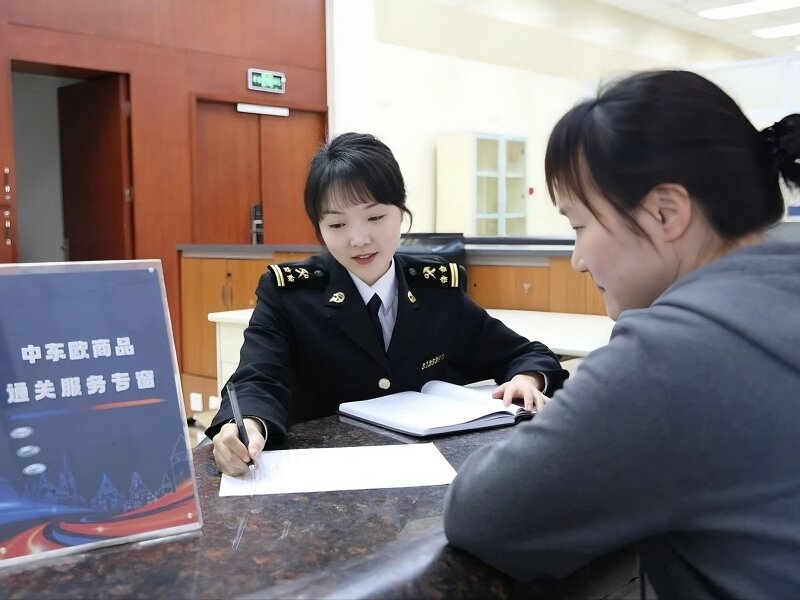
"Made in Ningbo" Reinforces Industrial Chains While Accelerating Market Expansion in CEE
2025-12-31
During the same period, Ningbo achieved bilateral trade with CEE countries valued at 54.07 billion yuan, marking a 4.1% year-on-year increase.

Ningbo Manufacturers Push into Central, Eastern Europe to Fortify Supply Chains
2025-12-16
During the same period, Ningbo's trade with CEE countries hit 54.07 billion yuan, a 4.1% year-on-year rise.
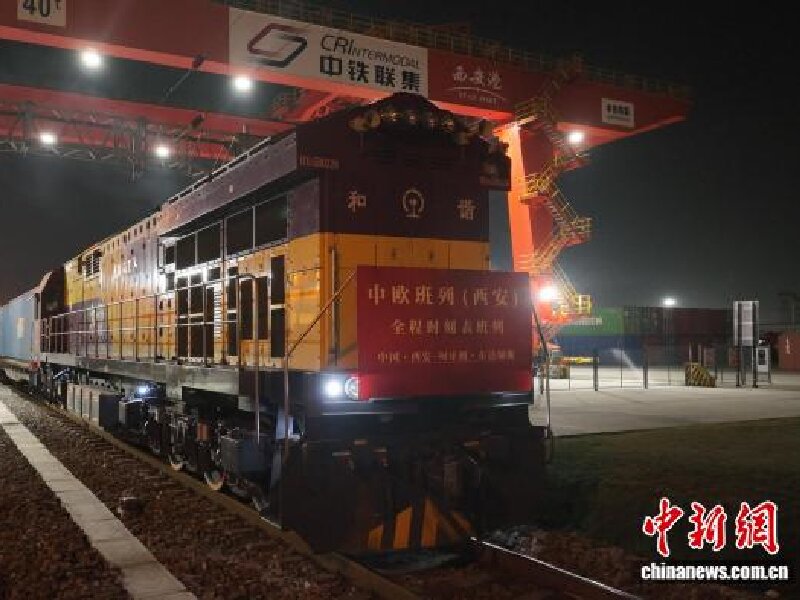
First Full-Timetable China-Europe Railway Express Service Launches on Xi'an-Budapest (Hungary) Route
2025-11-27
On the evening of November 22, the X8159 China-Europe Railway Express, operated by China Railway Xi'an Group Co., Ltd., sounded its departure whistle and slowly departed from Xi'an Guojigang Railway Station, laden with 45 containers of electronics, auto parts, and general merchandise, beginning its westward journey to Budapest, Hungary.
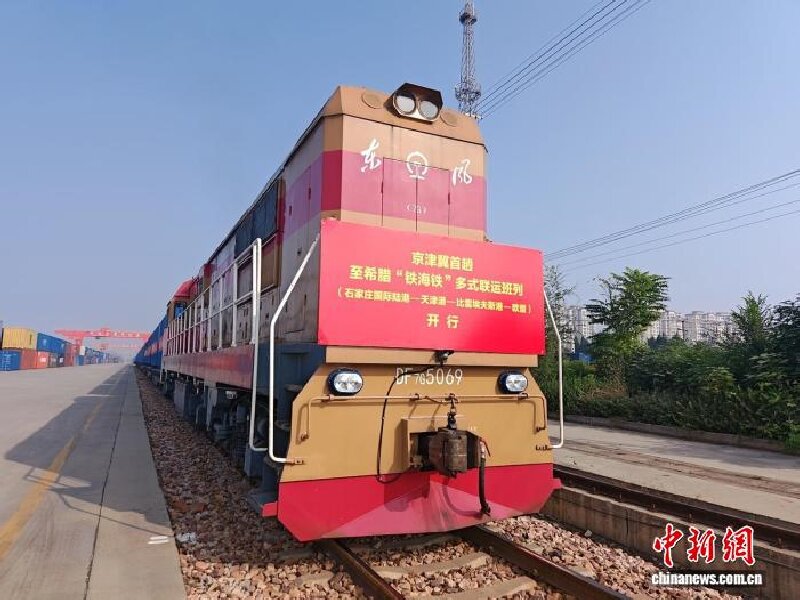
First “Rail-Sea-Rail” Multimodal Transport Train Launched from Beijing-Tianjin-Hebei Region to Greece
2025-11-05
The Beijing-Tianjin-Hebei region inaugurated its first “rail-sea-rail” multimodal transport train to Port of Piraeus in Greeceon October 28, with the train departing from Shijiazhuang International Dry Port.
.jpg)
Ningbo's Trade with CEECs Tops 45 Billion Yuan in First Three Quarters
2025-10-27
According to Ningbo Customs, in the first three quarters of this year, Ningbo's bilateral trade with CEECs reached 45.45 billion yuan, a 7% year-on-year increase, outpacing the city's overall trade growth by 3.3 percentage points.
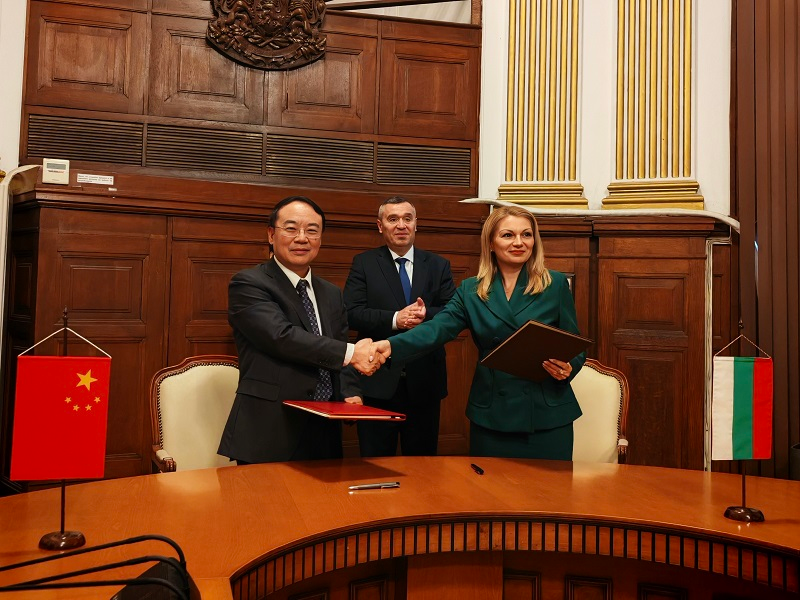
Deputy Commissioner of the General Administration of Customs of China Wu Haiping in Talks with Swiss, Bulgarian Authorities
2025-10-22
From October 13 to 18, Wu Haiping, Deputy Commissioner of the General Administration of Customs of China, led a delegation on an official visit to Switzerland and Bulgaria, engaging with counterpart authorities and relevant international organizations.
Hot News